Packaging accounts for around 40% of global plastic use and is responsible for a similar share of plastic waste, making it a significant sustainability challenge in the food and drink industry. As manufacturers seek practical ways to reduce reliance on single-use packaging, circular solutions that prioritise reuse and refurbishment are increasingly important.
Against this backdrop, Ellsey’s Vinegar and WERIT UK have developed a reusable Intermediate Bulk Container (IBC) model that integrates sustainability, food safety and operational efficiency.
For Ellsey’s Vinegar, a family-owned business which supplies bulk vinegar to food manufacturers, managing the movement of several million litres of vinegar each year is an operational challenge.
As demand for sustainable packaging solutions increases, the company found a robust, food-safe IBC system that supports long-term reuse, while meeting the high standards required by major food manufacturers.
The challenge was not simply transporting vinegar. Ellsey’s needed to ensure its containers remained suitable for food production environments, could be inspected and maintained efficiently, and reduced waste without compromising product quality or customer confidence.
The solution
Ellsey’s found its answer in a long-standing partnership with WERIT UK.
The company has used WERIT IBCs for several years now, as part of its bulk distribution model, developing a circular approach based on collection, inspection, refurbishment, and reuse. Ellsey’s says the relationship has evolved beyond a traditional supplier arrangement into a collaborative partnership focused on continuous improvement and operational efficiency.
Jason Waywell, National Sales Manager at WERIT UK, said: “Sustainability is most effective when it becomes part of everyday operations rather than a standalone initiative. The partnership with Ellsey’s demonstrates how reusable, food-grade IBCs can help businesses reduce waste, extend packaging life and maintain the highest standards of food safety. It is a practical example of circular economy principles delivering measurable value.”
Today, more than 2,000 WERIT IBCs are in use across Ellsey’s operations and customer network, transporting several million litres of vinegar annually to food manufacturers across the UK and Ireland. And when properly maintained and inspected, each IBC can remain in service for up to six years.
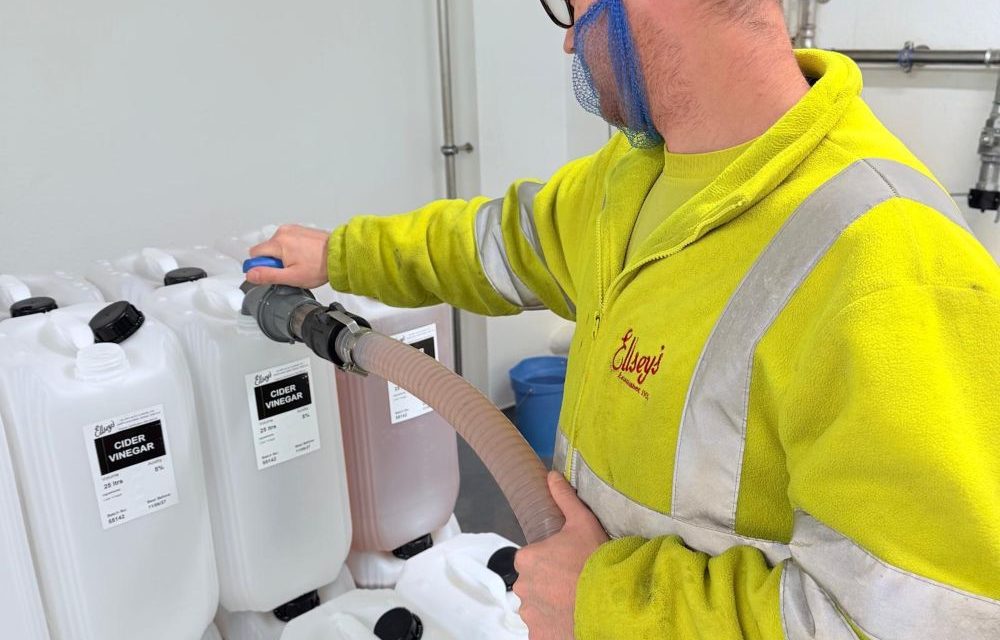
Instead of treating IBCs as disposable assets, Ellsey’s operates a managed return system. Containers are collected from customers, inspected, cleaned and assessed before being returned to service. Any components showing signs of wear can be replaced, extending the container’s lifespan and reducing the need for new units.
This approach aligns closely with WERIT’s design philosophy. The company’s modular IBC system has been developed to support cleaning, refurbishment and component replacement.
The transition to WERIT’s latest generation of IBCs has also significantly improved sustainability. Earlier container designs typically used wooden pallets and steel components that were susceptible to corrosion, requiring frequent maintenance, repainting and repair to remain suitable for food manufacturing environments. WERIT’s modern design incorporates a fully plastic pallet, galvanised vertical steel bars and replaceable components that resist corrosion and prevent liquid from collecting on the frame. The result is a cleaner, more durable IBC that requires less maintenance.
Food safety is fundamental to the partnership, with both Ellsey’s and WERIT operating to the same BRCGS AA Grade standard, demonstrating a shared commitment to the highest levels of quality, compliance and supply chain assurance.
These certifications provide confidence throughout the supply chain that both the ingredient manufacturer and packaging supplier operate under recognised, independently audited quality systems.
Tim Williams, Managing Director at Ellsey’s, said: “Food safety is non-negotiable for us. The BRC framework has transformed how businesses across the food supply chain work together by providing a recognised benchmark that customers trust. Having suppliers who understand those requirements and can consistently support them is extremely important.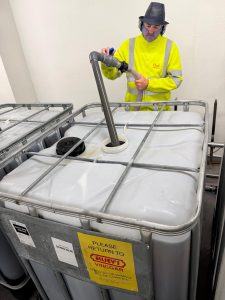
“WERIT’s modern IBC design, with its fully plastic pallet, galvanised vertical steel bars, and replaceable components, has helped us improve durability while reducing maintenance requirements. By preventing corrosion and making refurbishment easier, the containers remain fit for food manufacturing for up to six years, supporting both our sustainability objectives and operational efficiency.”
The food-grade credentials of the containers are particularly important. WERIT’s food-industry IBCs are manufactured using FDA-approved materials and are designed specifically for food applications, helping customers meet demanding hygiene and traceability requirements.
Equally important is the ongoing dialogue between the two companies. Through years of practical use, Ellsey’s has provided operational feedback that has helped refine aspects of container performance, ensuring products continue to meet the realities of day-to-day food manufacturing operations.
The results
The partnership has delivered benefits across sustainability, operational efficiency and customer service.
Today, Ellsey’s manages a pool of more than 2,000 reusable IBCs across its site and customer network. By extending the life of each container through inspection, maintenance and refurbishment, the company has reduced its reliance on new packaging while minimising waste generation.
The model also delivers commercial benefits. Reusable IBCs reduce packaging costs over time and help customers avoid the expense associated with continually purchasing new containers. By maximising the lifespan of each unit, Ellsey’s can maintain a competitive supply model while meeting stringent food safety requirements.
For Ellsey’s, the approach reflects a broader commitment to responsible business practices that have helped sustain the company for more than 90 years.
Ellsey’s Managing Director, Tim Williams, added, “We have always taken a long-term view of our business. Reusing and maintaining IBCs is good for the environment, our customers, and operational efficiency. The combination of trusted food safety standards, strong supplier relationships and a focus on reducing waste helps us continue delivering the service our customers expect.”
Looking ahead
As food manufacturers continue to seek ways to reduce environmental impact without compromising quality, the Ellsey’s and WERIT partnership demonstrates that sustainability does not always require radical change.
Sometimes the most effective solution is making existing resources work harder for longer.
By replacing a linear, single-use approach with a circular reuse model backed by recognised BRC certifications, food-grade materials and rigorous quality controls, both companies have shown how sustainability and food safety can work together successfully, creating benefits for manufacturers, customers and the wider food supply chain.
Read other recent UK Manufacturing news: https://uk-manufacturing-online.co.uk/category/news/