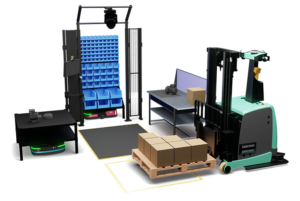
 Flexible automation is the future of manufacturing. This may seem a bold claim given that the technology it is based upon is not especially new. While systems like LIDAR, machine vision, and integrated ERP systems are highly advanced, they have become an evermore familiar sight in manufacturing facilities and warehouse operations around the world. Furthermore, the words “flexible automation” aren’t exactly as familiar as some of their contemporaries. Phrases like “industry 4.0” or “internet of things” have a great deal more search traction. Yet when you consider what flexible automation actually is, how it works, and how it differs from the much older fixed model, you come to realise why this change is so huge.
What is the difference between fixed and flexible automation?
Fixed automation is where your operation is built around your automation.
Flexible automation is where your automation adapts to your operation’s needs.
Fixed automation involves robots that are fundamentally unintelligent and unable to adapt. They require a rail, a track or some other fixed infrastructure to let them navigate around a warehouse or manufacturing facility. They also need storage or equipment points that are fixed in place to move between. Any operational workspace must be entirely configured around the movement systems of the robots themselves.
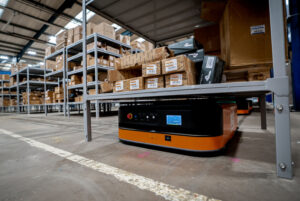 Flexible automation is the complete opposite. While there is some infrastructure, it is highly unintrusive. A DM code on the floor here. The odd sensor reflector on the wall there. All small scale and out of the way, only there to give navigational aid to the robots that can move around any size or shape of space you might have to hand. The robots of flexible automation can scan a room with a sophisticated suite of sensors, find the best routes to move, and can adapt and change if the room changes configuration or an obstacle emerges.
This represents not so much a change in technology, but rather a revolutionary application of existing systems. All bringing new levels of efficiency and energy to your manufacturing operation. Consider the following three major changes to learn more.
Flexible automation is accessible
Flexible automation does not require the kind of lengthy, expensive, and disruptive installation processes that previous waves of automation demanded. The kind of transportation networks that made fixed automation possible in some facilities needed entire purpose-built superstructures all around them to make the automation have even the basic means necessary to find its way. When you strip out all that work, you make automation something that can be used by a much wider variety of businesses. It doesn’t matter the size or shape of your existing facility. The robots of flexible automation can scan the room, the right code panels and sensor reflectors can be installed, and away you go. Much easier to make work. Much more ready for the future.
Flexible automation is changeable
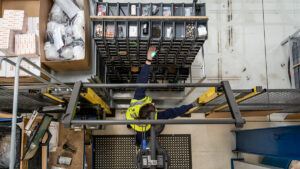 The manufacturing sector is an ever-changing landscape. New equipment, better technology, and refined techniques are going to mean that the organisation of your factory floor may need to be rearranged and reformatted on a regular basis (or at least, regular by the standards of many other sectors). This means you need an automation set up that can be moved to one side, where you can have the space to install new and bigger/smaller equipment, and then put it back and have it working and providing faster and better than ever. Your automation system needs to work around and with the changing nature of your industry. For that, you need flexible automation.
Flexible automation is expandable
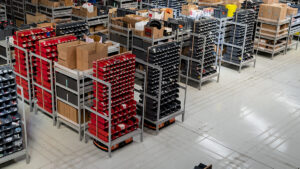
Flexible automation is not just the future of the industry generally, but the future of your business specifically. Imagine trying to expand a manufacturing facility when you have a built-in place set of rails and gantries that move every item between static production stations. While it is possible, it’s also going to be expensive, time-consuming, and disruptive in the extreme. Flexible automation circumvents these problems by allowing you to grow easily. If you have extra space, the robots of flexible automation will be happy to fill it. Simply give them the very limited navigational assistance they require, and they can find their way. If you want your business to grow, you need an automation system that can grow with you and not pile extra costs around you while you do it. You need flexible automation.
 Discover flexible automation
Wise Robotics is delivering a revolutionary model of robotic automation for every kind of business. With huge ranges of applications across everything from goods-to-person warehousing, to materials handling procedures and production line solutions, our industry 4.0 technology is sector-defining.
Joe Daft, Head of Robotics at Wise Robotics
joe.daft@wiserobotics.com