Across NATO and allied markets, rearmament is driving a sharp rise in production demand for munitions, drones and military platforms. As defence programmes accelerate output, the supply chain must keep pace across every layer of manufacturing, including the wire and cable that support power and communications. The recent NATO Summit in Ankara has placed industrial readiness at the centre of that effort. Here, Ryan Barnhart, senior supply chain director at wire, cable and interconnect specialist WireMasters, discusses why electrical interconnect availability is becoming a critical test of defence production resilience.
That test is more pressing as NATO has moved from pledges to implementation. At the 2025 NATO Summit in The Hague, Allies committed to invest five per cent of GDP annually in core defence and security-related spending by 2035, including at least 3.5 per cent for core military requirements and up to 1.5 per cent for areas such as critical infrastructure and defence industrial capacity.
NATO stated that the investment would provide the “forces, capabilities, resources, infrastructure, warfighting readiness and resilience” needed to strengthen deterrence and defence.
Leaders met again in Ankara in July 2026 to assess that progress, and the summit’s Defence Industry Forum turned much of the abstract investment commitment into contracts. Allies announced more than fifty billion dollars in new procurement deals, spanning capability priorities from precision strike to air and missile defence.
Demand at scale
The current increase in demand is being driven by a broader push to rebuild defence capacity. Governments are replenishing munitions stocks while accelerating procurement across newer and established platforms, including drones, interceptors, ground vehicles and naval systems. NATO has now backed that shift with a five-year, forty-billion-dollar investment in counter-drone capabilities, covering detection, jamming and neutralisation systems with their own dense cable and sensor demands. This is moving more programmes into production at the same time, creating sustained demand for the qualified electrical components needed to build and integrate them.

Do not use without permission
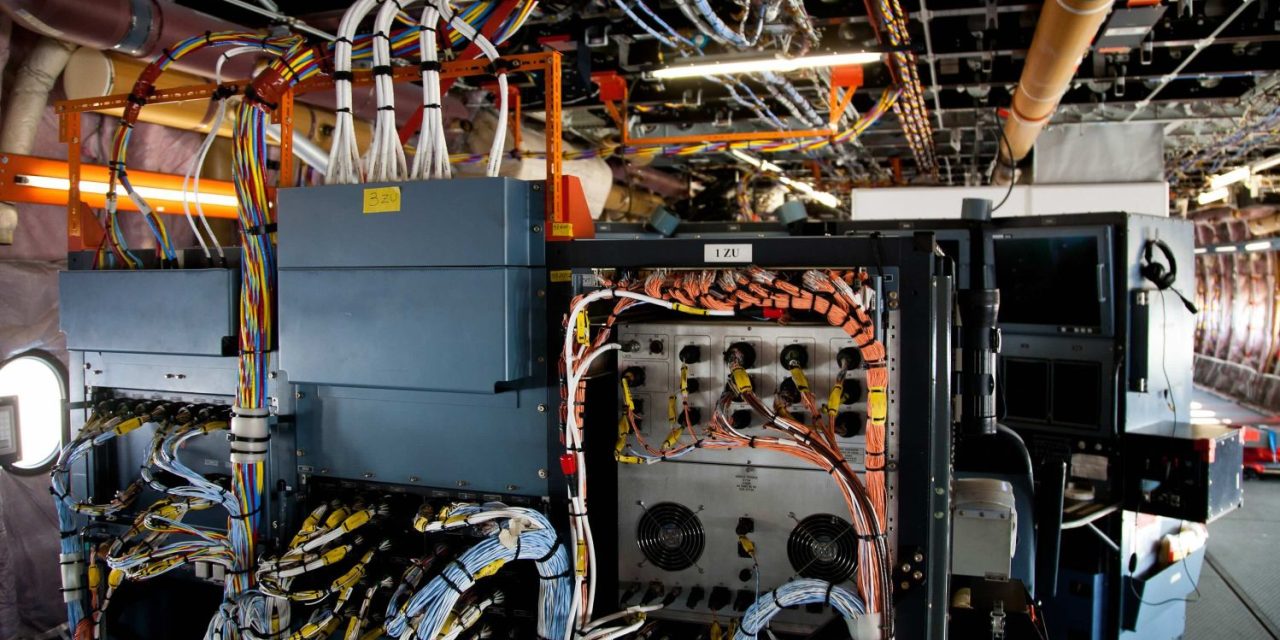
Mil-spec wire and cable underpin the power, communications and data systems used across modern defence platforms. Demand is rising for high-performance products as these platforms take on more advanced sensing and electronic capability. NATO has noted that “emerging and disruptive technologies like artificial intelligence, autonomous systems, biotech and quantum technologies are changing the character of conflict”, increasing the need for shielded data and power cables that can support more complex electrical architectures. Harness-protection products are also under greater pressure as manufacturers work to maintain reliability in demanding environments.
The challenge is that the products seeing the strongest demand are often the hardest to scale. High-temperature aerospace wire and ruggedised harness-management products rely on specialist materials and military qualifications and are produced by a limited number of approved manufacturers. That restricts how quickly supply can respond when several defence programmes increase output at once. What began as isolated demand peaks around individual programmes has become a much broader production requirement across NATO and allied markets.
Qualified supply
The pressure becomes more acute once an interconnect product has been designed into a platform. Wire, cable and connector specifications are approved for a particular application after extensive testing. Changing a cable construction or supplier can trigger engineering review, documentation amendments and customer approval.
This leaves limited room to react when a qualified product becomes unavailable. An alternative may exist, but validating it for use can take months. For some products, a new qualification can take between 12 and 24 months. A delayed interconnect component can therefore hold up electrical integration and prevent a platform from progressing through final assembly.
The risk also extends beyond individual wire and cable products. Connector accessories, backshells and shielding materials are all needed to complete a harness assembly, and volatility in metals such as copper, silver, gold and nickel can affect lead times just as much as qualification timelines do. Complete documentation carries similar weight, since incomplete records can hold materials in inspection or keep them out of inventory altogether.
Distribution partners can support this process through demand planning, inventory management and value-added services such as kitting, cable preparation and cut-to-length supply, helping manufacturers receive materials in a production-ready format.
Readiness in practice
The Ankara Summit has shown that defence investment is translating into sustained industrial output. For manufacturers, that will depend on far more than headline production capacity. Electrical interconnects may be a small part of a platform’s overall cost, but they remain essential to its ability to progress through assembly and enter service.
As defence programmes move from commitment into delivery, supply continuity and early planning for qualified components will become increasingly important to keeping production on track.
To learn more about WireMasters’ military interconnect capabilities and value-added services, visit www.wiremasters.com.
Read other recent UK Manufacturing news: https://uk-manufacturing-online.co.uk/category/news/