In many CNC machining environments, lasers and machine tools are treated as separate processes, sometimes even separate departments. However, as production requirements become more complex, manufacturers are looking at the potential to optimise workflows between laser cutting and CNC machining.
Here, Gaetano Lo Guzzo, Director of Laser Business Europe at manufacturing technology specialist Mazak, explains how synchronisation between laser and CNC can be achieved using shared automation, smart scheduling and right‑first‑time blanking.
In manufacturing, timing matters. Precise planning and control of production time has a far‑reaching impact, extending from operational costs and delivery commitments to reputation and overall customer satisfaction. The ability to have a grip on any small gaps in the production process can contribute to significant improvements.
As automation technology and advanced equipment support the sector in meeting targets for output and quality, attention is shifting to how materials and goods move through a process. For manufacturers, streamlining movement and eliminating unnecessary transitions are central to achieving maximum shopfloor efficiency.
Identifying synergies between production units or cells can help to balance flexibility with predictability to respond to change and control time management. Integrating laser and CNC operations is now widely regarded as an area where further efficiency goals can be met.
Getting it ‘right first time’
Laser cutting and CNC machining have traditionally been organised into separate departments with different equipment and different methods of operation. However, thanks to a new wave of innovation boosting the functionality and versatility of equipment, this landscape is changing. Increasingly, lasers and CNC machines are connected by technology that enhances accuracy and reduces variability, making it possible to cut parts once and proceed to machining with unrivalled levels of precision.
Manufacturers applying this approach are finding clear workflow benefits. One example is DC Developments in Norfolk, which reorganised its processes after investing in two new fibre laser machines from Mazak. The company, already recognised for its fast production of metal components, aligned its laser and CNC operations to speed up transition between processes. As a result, cut parts can now move straight into machining for finishing, supporting ultra-quick turnaround, shorter lead times and reliable output.
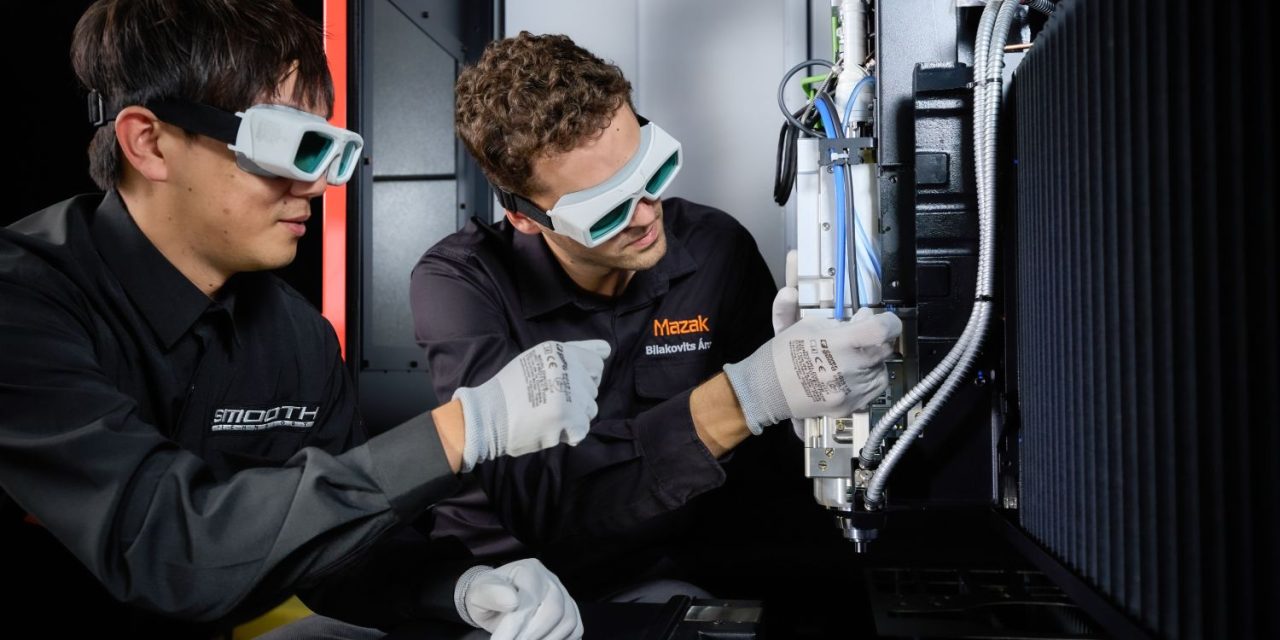
Achieving this method depends on ‘right first time’ laser blanking. The development of fibre technology in laser cutting means tasks are performed consistently to an excellent standard. Machining time can also be reduced for larger or complex parts by removing excess material quickly with a laser “rough cut” before the tooling stage begins.
The energy efficiency of fibre laser technology offers an additional benefit. Compared with CO₂ systems, fibre lasers operate with less electrical power consumption without the use of process gas. And, with fewer parts, reduced maintenance requirements mean that equipment is easier and cheaper to maintain. This longevity decreases the need for replacements, lowering carbon impact by ensuring less waste.
Take Mazak itself is an example. In its own Worcester factory, introducing two OPTIPLEX NEO fibre laser machines has cut energy consumption by 67% in comparison with four CO₂ cutters, demonstrating the scale of potential savings for manufacturers investing in updated systems.
Shared automation equals double the learning
Of course, with automation, systems are less prone to error when programmed correctly.
High levels of precision and consistency can be maintained while significantly speeding up the production process, particularly when the advantages of technology and skills of operators blend to achieve the highest standards.
Workplace organisation remains at the core of lean manufacturing principles. Having computercontrolled equipment, such as laser cutters and machine tools positioned side by side makes it easier to share knowledge and expand capabilities. Operators gain crosstraining opportunities simply by working in these integrated environments and can effectively run more than one machine at a time if they can easily move from one to another.
As robotics and artificial intelligence develop, continual workforce upskilling will be essential. Yet, there is technology out there that also considers the challenges machine-tool users face. Modern conversational interfaces are easy and intuitive to use, while collaborative robots take on repetitive handling tasks safely alongside skilled staff. Both approaches ensure that automation supports rather than replaces people, making learning and adaptation an ongoing process.
Practical applications are already showing these advantages. In integrated laser and machining, robotic sorting systems can load raw material and remove waste for unattended production periods, sort finished parts and load pallets ready for the next stage of production. With these tasks coordinated by intelligent software, changeovers take place faster and motion waste is reduced to a minimum.
As proficiency grows and teams become more confident through integration and automation, the benefits multiply. Businesses find they can extend their services, diversify production, and deliver more complete solutions to customers. Synchronisation, therefore, does more than raise efficiency, it builds an environment where both machines and people learn continuously, reinforcing each other’s strengths.
The impact of automation has been highlighted through the adoption of Mazak fibre systems at AV Metals, a business specialising in sheet metal manufacturing. Previously, the company had relied on an older CO₂ laser, which meant that reliability had become a major issue. However, by upgrading with a Mazak fibre laser solution, AV Metals not only improved cutting consistency but also integrated processes alongside machining. This has removed uncertainty, strengthened planning, and ensured customer orders proceed without delays caused by breakdowns or interrupted workflows.
Scheduling for competitive advantage
As technology use in manufacturing increases, more production data is available than ever before, creating a strong foundation for productivity gains. When laser cutting and machining are combined, optimising equipment utilisation becomes easier to achieve, especially when supported by automated tasks and flexible workflows.
Factors such as customer demand, order size, material supply, workforce availability and logistics can all be fed into adaptive programming systems. This makes it possible to identify improvements and implement them quickly. With the right factory layout and the necessary operator skills in place, the focus then shifts to maximising the opportunities that integrated laser and CNC operations now make possible.
The MAZAK SMART SYSTEM, for example, demonstrates the advantages of this approach. By consolidating data from different processes into a single platform, it removes the delays caused by fragmented information and ensures production can start without unnecessary interruptions. This effective scheduling not only helps to optimise resources, saving both time and cost, but also supports reliable inventory control and increases overall capacity.
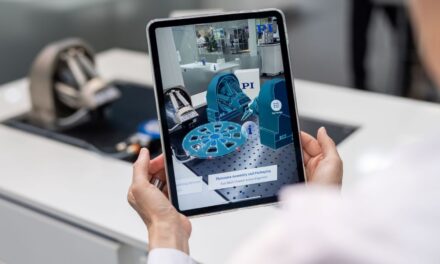
With the right partner, scheduling benefits do not stop at the point of purchase either. Programming and setup support extend well beyond the customer service centre. Alongside traditional training and technical advice, new tools such as augmented reality are being introduced to strengthen diagnostic, repair and service support, further ensuring that schedules remain on track and downtime is minimised.
Crafting change
One of the most immediate benefits of combining laser and machining is the creation of short, simple production flows. But the value doesn’t stop there. Integration also opens up opportunities to add services, improve productivity, reduce energy consumption and raise overall quality standards.
On a practical level, linking these operations can help reduce spatial waste. Recognising that grouping machines by type is not always the most logical approach can transform how floor space is used and deliver significant organisational improvements.
In fact, Mazak identified this shift as far back as 2012. As the company extended its presence into laser cutting, the focus was placed on combining the latest CNC technology with advanced software and ergonomic machine design.
The aim was to make cuttingedge automation and advanced processing more accessible to a wider customer range of businesses. By aligning the strengths of the laser and machine tool divisions, Mazak set out to deliver greater benefits and efficiencies for manufacturers.
When efficiency and organisation go hand in hand, even a single adjustment can trigger broader improvements across a factory. Time saved in one area rapidly translates into wider gains. And, after all, time is money.
Read other recent UK Manufacturing news: https://uk-manufacturing-online.co.uk/category/news/