UK sustainable electronics innovator In2tec has played a key role in JLR’s recently announced Project Cornerstone, contributing its patented circular electronics technology to help demonstrate how future vehicles can be designed for repairability, recoverability and reuse.
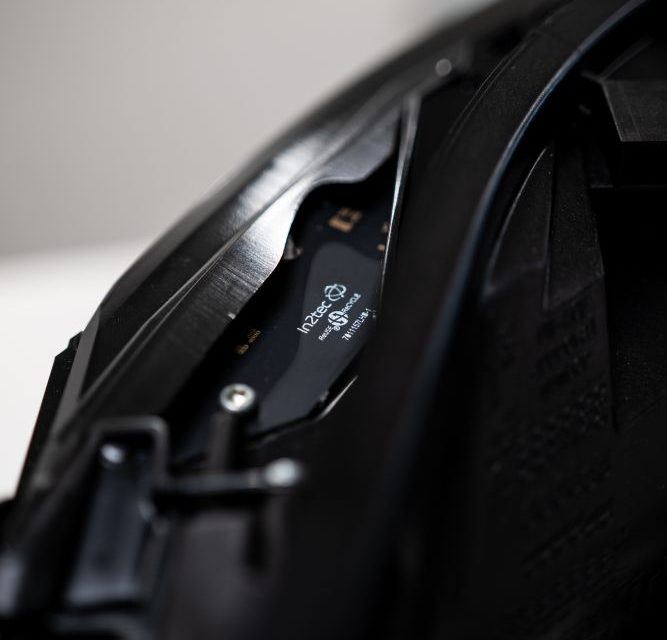
Project Cornerstone brings together more than 40 supply chain partners to explore how circular economy principles can be embedded into vehicle design from the outset. As one of the specialist technology partners selected to support the programme, In2tec has applied its proprietary ReUSE® and ReCYCLE™ technologies to one of the automotive industry’s most technically demanding applications—vehicle headlamp electronics.
The collaboration marks another significant milestone for In2tec as global manufacturers increasingly look beyond traditional recycling towards designing products that retain their value throughout multiple life cycles.
For decades, electronic assemblies have relied on permanent soldered connections, making repair and component recovery extremely difficult once products reach the end of their operational life. In2tec’s patented technology replaces solder with a reversible conductive adhesive, allowing electronic assemblies to be disassembled without compromising performance.
Within Project Cornerstone, this enables electronic components within headlamp systems to be recovered, tested and reused rather than discarded, supporting JLR’s wider ambition of creating vehicle systems that can be repaired, reused and ultimately recycled.
Automotive lighting represents one of the most challenging environments for electronic assemblies, demanding exceptional reliability, thermal stability and long-term performance. Demonstrating recoverable electronics within such an application provides powerful validation of In2tec’s technology.
Importantly, testing has shown no observable difference in performance between recovered electronic components and newly manufactured parts, confirming that circular electronics can meet the rigorous standards required for automotive production.
For In2tec, participation in Project Cornerstone represents far more than involvement in a concept programme. It demonstrates growing recognition from leading vehicle manufacturers that achieving true circularity requires innovation within the electronic design process rather than relying solely on improvements to materials or end-of-life recycling.
“The transition to circular manufacturing starts at the design stage,” said Emma Armstrong, Sustainable Electronics Ambassador at In2tec. “We are delighted to have worked alongside JLR on Project Cornerstone to demonstrate how recoverable electronics can become part of the next generation of vehicle design.
“For many years the electronics industry has accepted that soldered assemblies are effectively permanent. Our technology challenges that assumption by enabling electronic components to be recovered and reused while continuing to deliver the performance demanded by automotive applications.”
The collaboration also highlights the increasingly important role suppliers play in helping OEMs achieve ambitious sustainability targets. By engaging technology partners early in the design process, manufacturers can embed circularity into products from the outset rather than attempting to address it once products reach end of life.
Beyond the environmental benefits, recoverable electronics offer significant commercial advantages. Reusing high-value components reduces demand for virgin materials, lowers embedded carbon, improves resource security and creates opportunities to recover value from both production fallout and end-of-life vehicles.
Although Project Cornerstone is a demonstrator programme, the technologies showcased have been developed using production-relevant components, underlining their potential for future vehicle programmes.
For In2tec, the collaboration provides further evidence that its circular electronics platform is moving from innovative concept to industrial reality. As automotive manufacturers continue to accelerate their transition towards more sustainable manufacturing, the company’s technologies are helping redefine how electronic systems are designed, manufactured and managed throughout their entire lifecycle.
By working collaboratively with one of the world’s leading automotive manufacturers, In2tec is demonstrating that circular electronics are no longer a future aspiration—they are becoming a practical engineering solution capable of supporting the next generation of sustainable vehicle manufacturing.
Read other recent UK Manufacturing news: https://uk-manufacturing-online.co.uk/category/news/