 Neil Jackson, Industry Manager – Oil & Gas for Endress+Hauser Ltd, discusses the potential of hydrogen to overcome the world’s decarbonisation challenges.
Hydrogen has two key roles to play as the world seeks to achieve net-zero CO₂ emissions by 2050: one is to enable greater use of renewable electricity and the other is decarbonising many other parts of the global economy, including those CO₂-intensive sectors that are difficult to abate using renewables.
When it comes to enabling greater use of renewable electricity, hydrogen can be used as a form of energy storage and as a cleaner source of reliable power generation. To produce hydrogen at the scale required to fulfil these functions requires the decarbonisation of traditional hydrogen production. This is currently being achieved through carbon capture, utilisation and storage (CCUS) to produce what is being labelled ‘blue’ hydrogen until production of ‘green’ hydrogen from renewable sources via electrolysis becomes commercially viable.
 For hydrogen’s second role of decarbonising the CO₂-intensive ‘hard to abate’ sectors, there are three areas where it can help reduce emissions. The first is reduction of CO₂ emissions from heavy industry by replacing traditional hydrocarbons as a feedstock in production processes and as a source of industrial heat. The second is cutting CO₂ emissions in long-haul and heavy transportation applications such as shipping, where electrification through batteries is currently unviable. And the third is decarbonising power and heating of residential and commercial buildings.
Blue hydrogen production
Blue hydrogen is derived from natural gas through the process of steam methane reforming (SMR). SMR mixes natural gas with very hot steam, in the presence of a catalyst, where a chemical reaction creates hydrogen and carbon monoxide. Water is added to the mixture, converting the carbon monoxide to carbon dioxide and creating more hydrogen. The carbon dioxide emissions produced are then captured and stored underground using CCUS technology, leaving nearly pure blue hydrogen.
Endress+Hauser has been involved in the SMR process for many years, supplying process critical instrumentation to ensure safe and efficient plant operation. There are several important and often safety-critical areas of the plant that require accurate measurement. Water preparation filtration requires conductivity, pH or solids measurements, all of which can be achieved using our extensive range of Memosens analysers and steam and water analysis systems (SWAS panels). In the reactor, temperature is a key parameter often requiring multiple measurement points from a single entry in the vessel. Here Endress+Hauser can design a bespoke assembly incorporating up to 32 measurement points. Analysis of both the hydrogen and carbon dioxide gas is another important requirement, and here our range of laser-based technologies from Endress+Hauser Optical Analysis can help to optimise plant efficiency and avoid issues such as corrosion caused by too much moisture in the CO₂.
Green hydrogen production
 Green hydrogen is produced by splitting water by electrolysis, producing only hydrogen and oxygen. The latter can be released into the atmosphere with no negative impact. The electrolysis process is powered by renewable energy sources, such as wind and solar, making green hydrogen the cleanest option.
There are three main types of electrolysers that can be used to produce green hydrogen: proton exchange membrane (PEM), alkaline and solid oxide. Independent of the electrolyser technology used, efficient pre-processing of fresh water or sea water is needed. Field instrumentation and automation solutions play an important role in the reliable operation of water treatment facilities. Endress+Hauser offers a wide portfolio of smart measuring instruments for water processing, including reliable liquid analysers and traceable and verifiable flow measurement.
Transportation and storage
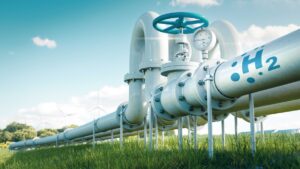
 Hydrogen can be injected into existing natural gas pipelines for transportation. In many countries, hydrogen networks and pipelines are being designed and constructed to develop the hydrogen ecosystem. Selecting suitable flow metering technology and metallurgy requires experience to deliver the right solution. Endress+Hauser offers precise and reliable quantity measurement with our Promass Coriolis mass flowmeter as well as expertise in design, engineering and assembly of flow metering solutions and compliance to local and international standards.
Liquefaction of hydrogen is an energy-intensive process and includes three steps: compression, cooling and expansion. Hydrogen is loaded in marine vessels and transported in the liquid cryogenic phase (LH2 at -252°C). During transport, storage and further distribution, continuous monitoring of the tank level is critical. Endress+Hauser can provide continuous primary level measurement or redundant operation with high-precision, safe and reliable Proservo level gauge remote access and configuration.
It’s clear that increasing hydrogen production will be essential in meeting net zero, with the latest analysis suggesting hydrogen could make up 20–35% of the UK’s final energy consumption by 2050. Meeting these ambitious targets will require not only investment and expertise from energy companies and technology providers alike but also their continued cooperation to ensure a successful transition.