As manufacturers navigate ongoing business uncertainty, diversification has become increasingly important. Expanding into new sectors or geographic regions is widely seen as a way to build resilience, reduce dependency on a single market and stabilise demand. However, while many businesses are diversifying, far fewer are transferring the knowledge and skills needed to succeed in new environments. Here, Hakan Aydoğdu, CEO of CNC automation specialist Tezmaksan explores how cross-sector knowledge exchange can unlock resilience, productivity and long-term growth.
Many manufacturers entering new sectors continue to operate within the same knowledge boundaries, failing to adopt expertise, processes and workforce strategies already established elsewhere in the industry.
The seventh edition of the European Employment Services (EURES) report on labour market imbalances highlights persistent shortages in technical and engineering roles, particularly in advanced manufacturing sectors where specialist skills are increasingly difficult to source.
Industries such as aerospace, automotive and general manufacturing rely on similar technologies and production principles, yet expertise has not historically been shared in a structured way. As a result, valuable knowledge remains siloed between sectors, limiting workforce development and operational resilience.
A missed opportunity across sectors
Aerospace manufacturers are known for rigorous quality standards, traceability and process control. Automotive production, meanwhile, has prioritised efficiency, scalability and lean manufacturing. Both sectors depend on advanced machining and skilled engineers, yet lessons developed in one are not always applied in the other.
Manufacturers facing skills shortages are often developing separate approaches to training, process optimisation and workforce planning, rather than building on knowledge from adjacent sectors. In a constrained labour market, this duplication slows progress and scaling. According to Deloitte and The Manufacturing Institute, as many as 3.8 million new manufacturing roles may need to be filled by 2033, with a significant proportion expected to remain vacant due to ongoing skills shortages.
Unlocking mobility and shared learning
Addressing this issue requires a shift in how skills are viewed. Many capabilities are transferable across sectors. CNC programming, production planning, quality assurance and digital integration are manufacturing competencies, not sector-specific skills.
Encouraging cross-sector hiring mobility can help address this. Engineers and operators moving between industries bring experience that can be adapted to new applications. Yet mobility is often limited by perceptions that sector-specific knowledge is not transferable, even when core skills are highly aligned.
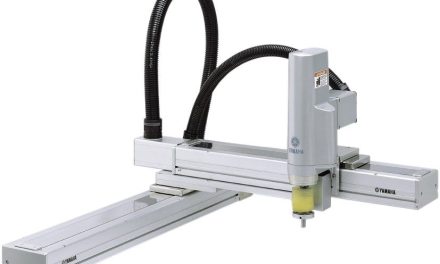
This principle should also extend to the technologies supporting production. Automation platforms built around consistent interfaces and standardised workflows can reduce the need for sector-specific retraining, allowing operators to move more easily between applications. Modular CNC automation systems, such as Tezmaksan’s CubeBOX™ integrated with RoboCAM+® software, are designed with this approach in mind, helping manufacturers apply existing skills across different machines, production environments and industries.
Training ecosystems also have a role to play. Greater collaboration between industry, education providers and training organisations can help standardise key competencies, making it easier for workers to transition between sectors. Shared skills frameworks would allow manufacturers to access a broader talent pool instead of competing for limited resources.
The World Economic Forum estimates that 39 per cent of workers’ core skills will change by 2030, reinforcing the need for more adaptable training systems and transferable technical competencies across manufacturing sectors.
The role of the supply chain
Supply chain collaboration is also important. Manufacturers rarely operate in isolation, yet knowledge sharing across supply chains is often limited to immediate operational requirements. Expanding this exchange to include best practices, process improvements and workforce development strategies can create wider benefits.
Suppliers working across multiple sectors are well positioned to transfer insights between industries. By fostering stronger collaboration, manufacturers can access a wider base of experience and accelerate the adoption of proven approaches.
This is increasingly important as production becomes more interconnected. Digital systems, standardised processes and shared technologies are making it easier to apply knowledge across applications.
From diversification to resilience
Diversification remains an important step towards resilience, but it is only part of the solution. According to PwC, 63 per cent of companies are adapting their supply chains to manage disruption, reflecting how resilience and operational flexibility are becoming central priorities across manufacturing.
Manufacturers that combine diversification with active knowledge exchange will be better positioned to respond to changing demand, adopt new technologies and make better use of available skills. They can draw on a wider pool of expertise to improve performance.
Ultimately, closing the manufacturing skills gap will require more than recruitment. It will depend on how effectively the manufacturing industry shares what it already knows. Breaking down silos between sectors, improving workforce mobility and strengthening collaboration across supply chains are essential to building a more resilient and competitive manufacturing landscape.
To learn more about how integrated manufacturing approaches can support knowledge transfer and improve performance across sectors, visit Tezmaksan Robot Technologies’ website.
Read other recent UK Manufacturing news: https://uk-manufacturing-online.co.uk/category/news/