
The Intergovernmental Panel on Climate Change’s latest report has put the need for meaningful action on climate change into stark focus. As a result, industries will have to accelerate reductions in scope 1 and 2 emissions. Here, Dr Martin Lawrence, Combustion Development Specialist at leading industrial gas company Air Products, pioneers a way to further reduce harmful emissions from aluminium production.
Producing secondary aluminium
As the second most produced metal worldwide, aluminium is used in all facets of life, from everyday kitchen appliances to large scale machinery and aircraft.
Those using aluminium are already making great strides in reducing the emissions from this common metal by recycling it. Using secondary – i.e., ‘recycled’ – aluminium, requires 95 per cent less energy than its newly-produced (primary) variant.1 It also saves 97 per cent of greenhouse gas emissions produced in the primary production process. This means that recycling just one tonne of aluminium saves nine tonnes of carbon dioxide emissions.2
With such compelling statistics, it is no surprise that almost a quarter of all aluminium produced is now secondary, and – given global net zero targets – this is only set to grow.3
But I believe we can do even better.
The Horizontal Transient Heating Burner
Secondary aluminium is the first step towards decarbonising, and it is a big step, but more can be done. The manufacturing to produce aluminium from recycled material also needs to be decarbonised – but how? Surely the energy required to produce aluminium is a scientific fact, and therefore non-negotiable? While this is true, we know that some fuels are more efficient, and some furnaces more effective, than others. As a chemical engineer specialising in the Primary Metals, Minerals and Energy sectors, each day I look at how to optimise melting processes in furnaces.
With colleagues at Air Products, we have designed the ‘Horizontal Transient Heating Burner’ and are awaiting the approval of our patent, as initially revealed in our article published in the October 2022 edition of Light Metal Age. I believe the Burner represents the future of aluminium production.
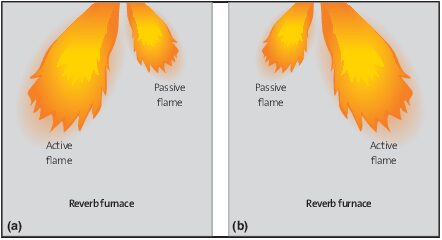
Innovatively, the Burner can redirect heat to cold areas automatically with strategically positioned sensors, increasing thermal efficiency in turn.
This boosts the Burner’s other features, such as being able to use the efficiencies of adding oxygen to fuel – oxy-fuel – to effectively carry out combustion using low-carbon intensity fuels to reach the same required temperatures.
Being extraordinarily versatile, it can also be used with other air-fuel or oxy-fuel burners or as an independent oxy-fuel burner. This provides a variety of options so users can choose whatever is best suited to their needs, confident in strong decarbonisation delivered by each option.
Oxy-fuel burners have added significance though, as they can reduce nitrous oxide emissions by up to 40 per cent, compared to conventional air-fuel burners. Nitrous oxide significantly damages the ozone layer, so its reduction is crucial in cutting harmful emissions.
These three improvements together mark a new dawn for aluminium production that could play a critical part in tackling the world’s most significant energy and environmental sustainability challenges. While pioneering major projects to reduce our Scope 1 and 2 carbon dioxide emissions by a third by 2030, we also know a daily focus on operational efficiency can make a huge cumulative difference.
The potential for hydrogen
Hydrogen is an important fuel to decarbonize hard-to-abate sectors. Working for the world’s largest hydrogen supplier, with a focus on the delivery of green hydrogen at scale, we have discovered that hydrogen also has a key role to play in the secondary aluminium manufacturing process.
In a series of four computational fluid dynamic (CFD) simulations, the melt time, efficiency, and carbon dioxide emissions of secondary aluminium production were measured using a standard air-fuel burner in comparison to oxy-fuel combustion. Using the latter, the Burner was able to assess the differences between using natural gas, a 70 per cent natural gas 30 per cent hydrogen blend, and 100 per cent hydrogen in the production of secondary aluminium.
Oxy-fuel combustion was shown to be significantly more efficient than air-fuel combustion. Additionally, hydrogen can increase efficiency, reduce melting times, and can completely eliminate carbon dioxide emissions. Compared to air-fuel combustion, burning a 100 per cent hydrogen blend using oxy-fuel not only resulted in a 1.3-hour reduction in melting times, but also cut fuel use by 27.1 per cent and entirely eliminated scope one carbon dioxide emissions.
These scenarios demonstrate that if pure hydrogen is used, and if that hydrogen is first produced using low-carbon means, it is possible to significantly reduce the harmful emissions created in the production of secondary aluminium as it stands today.
There is still more to do, but the Horizontal Transient Heating Burner demonstrates the potential for significant further decarbonisation in the secondary aluminium production industry and provides a practical, actionable solution for how an industry can combat climate change.
Further statistics and results are available in our paper which first appeared in the October 2022 issue of Light Metal Age.
1 https://www.bir.org/the-industry/non-ferrous-metals
2 https://alupro.org.uk/industry/local-authorities/environmental-benefits/#:~:text=Recycling%20aluminium%20uses%2095%25%20less,from%20which%20aluminium%20is%20made.
3 Baukal, C.E., Oxygen-Enhanced Combustion, 2nd edition, CRC Press, 2013.


