Primers, also known as chemical bridging, promote adhesion by modifying a surface by adding a layer that can be bonded to. They are typically used to promote bonding with low surface energy plastics or difficult-to-bond metals. While primers can create a stronger, longer-lasting bond, they are an additional process step and carry H&S considerations. Here Kevin Brownsill, Head of Technical: Learning and Development at adhesives specialist Intertronics, discusses the options available to manufacturers and design engineers.
Primers are typically introduced when testing shows that a bond is not sufficiently strong enough to last the product’s lifetime. Primers do not modify the surface, other than by adding a layer to the substrate that the adhesive can bond to. Generally, primers are used in applications with difficult to bond plastics, such as polypropylene, polyethylene, or silicone rubber, or when bonding metals, such as galvanised steel, copper, or gold.
The problem with primers
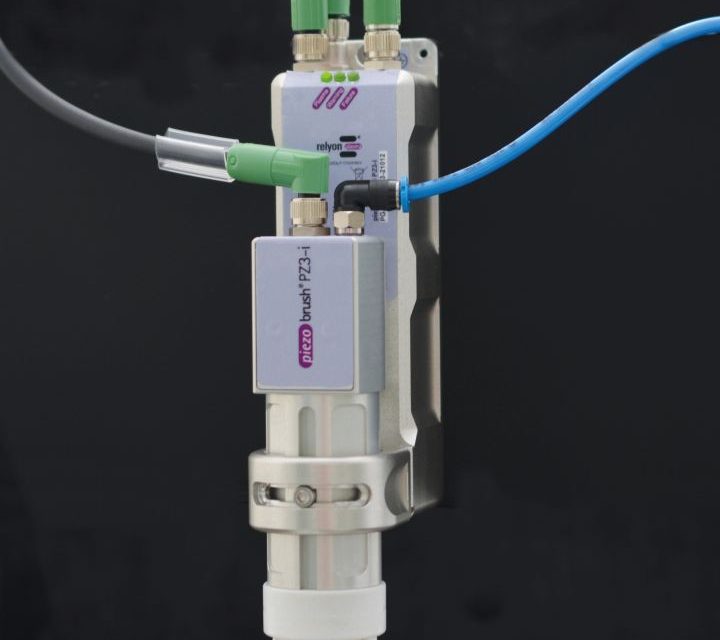
Applying a primer means an additional process which will need to be taken as seriously as the adhesives process to ensure repeatable results. Because primers are notoriously low viscosity and high wettability, they can therefore be difficult to dispense and apply.
If they are applied by hand with a brush, their use adds a manual process that may offer poor repeatability and accuracy. Process control can be difficult if it is not clear how much has been applied, how much has evaporated, and how much operator variability has occurred.
Primers can also be difficult to handle and are often hazardous to operators — they are solvented and may contain corrosive materials. This brings added H&S requirements, something many manufacturers work hard to avoid, as the Health and Safety Executive suggest solvents can cause “unconsciousness, irritation of the eyes, lungs, and skin, and headaches”. Finally, dispensing equipment for primers can add unwelcome costs that must be weighed up against the financial benefits that products using products can bring.
When primers can be avoided
In many cases, considering the adhesives process from the outset can circumvent needing a primer. An adhesives partner can guide you away from substrates that require a primer to bond well with your specified adhesive, or more likely, help you specify an adhesive which works well with your substrate without the need for a primer.
Alternatively, the adhesives partner may guide you towards surface treatment options instead, such as plasma surface treatment, blasting, or chemical etching. These processes can replace primers by altering the surface to make it more attractive to the adhesive, coating, or ink.
Plasma surface treatment, for example, can initiate several physical and chemical processes that treat the surface without additional chemicals. As well as increasing the substrate’s surface energy and, therefore, the wettability required for bonding, plasma can clean the surface and remove contaminants on the surface that would otherwise impede bonding.
When primers are essential
You can often engineer primers out of a process, but not always. Some silicones, particularly those cured with a platinum catalyst, need a primer for a different reason: to prevent cure inhibition. These silicones, often called “addition-cure” systems, can react badly with certain materials such as PVC and some metals. Instead of curing properly, the silicone remains soft or tacky. The issue is not poor adhesion. It is that the material never fully cures.
In many cases, changing the silicone is not practical because of its performance advantages, especially resistance to shock, vibration, and temperature. So the fix is simple and well established: apply a primer to the problematic surface, such as PVC-insulated wires in electronics potting, to ensure a complete cure.
An adhesives partner can guide you through the development of the process and advise on whether a primer is needed, or whether surface treatment or an alternative substrate may be best suited in your application. If a primer is inevitable, a partner can help from the outset to process and handle the primer in addition to the adhesive or potting compound, working to produce a well-controlled and well understood process, with the best possible health and safety practices in place.
For help developing a reliable and repeatable adhesives process, call 01865 842842 or visit https://www.intertronics.co.uk/ for more information.
Read other recent UK Manufacturing news: https://uk-manufacturing-online.co.uk/category/news/