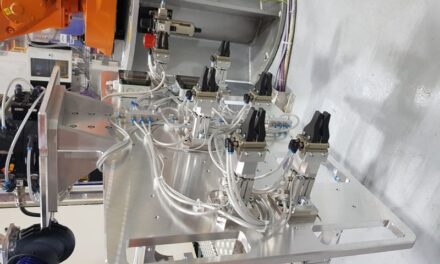
Discover how using next-generation warehouse automation can radically reduce one of the biggest costs of automation – installation
As the effects of the COVID ecommerce boom are being felt across more and more industries, the wider economy is now learning what manufacturers have understood for a long while. The urgency of automation.
As a sector, manufacturing has always been at the forefront of modern technology when it comes to enabling labour amplification through advanced equipment. This is why we see great luminaries of the likes of James Hargreaves and Henry Ford remembered as pioneers in the field for their contributions to the technical science of mass production.
However, a key expense that all these pioneers needed to face in the early days was the problem of installation. Putting new technology in its place and ensuring it works to plan has always been one of the more expensive parts of the process. During the eighteenth, nineteenth, and early twentieth centuries, people like Hargreaves had to rely on investors who believed in their vision.
In the latter stages of the previous century robust and well-proven equipment types still needed huge sums of money to bring them in and put them in place. Yet now, as the next wave of automation arrives, for the first time the installation cost is dropping. Flexible automation represents a revolutionary approach that makes automation much more accessible for many more businesses, while simultaneously delivering radical efficiency. To understand how that is possible, consider the following three factors that show how flexible automation can be installed and operational in a matter of mere weeks.
 Intelligent operations
The big difference between fixed and flexible warehouse automation is that the former needs high volumes of infrastructure.
This is because fixed robots have a very limited understanding of their surroundings. They can know where they are in relation to a rail, and reverse engineer their current position based on how fast and how long they have travelled along that rail in a given direction. It is all calculated awareness based on basic situational understandings. To make those understandings possible the robots of fixed automation need rails, tracks, gantries, and sundry other bulky infrastructure.
Flexible automation is different. The robots are able to make wide-ranging and detailed scans of an operational area. This is possible using everything from LIDAR sweeps of a factory to digital camera scans fed into machine vision software and discretely placed sensor reflectors that communicate important relative positioning information. These techniques require radically less infrastructure than fixed robotics systems require, which means that installation can be faster and far less expensive. Automation is adapting to become more accessible for more businesses.
Adaptable movement
The lack of need for new and bulky infrastructure means that not only are more businesses going to be able to afford the robotic technology of flexible automation. It also allows more facilities to stay as they are when the installation process begins.
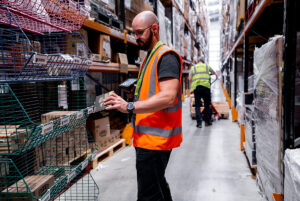 As the name implies, flexible robotics is meant to fit around you and your business. Fixed by contrast can’t do this. You will need to have a workspace of a particular size, shape, and specific set up that can actually accommodate the new technology you want to put in place. In the event that you don’t fit the parameters, it will mean modifications to the building itself, which increases costs further and makes installation take even longer.
Flexible automation requires none of this. The technology can adapt to fit in whatever space or situation your specific business needs to function. An extremely welcome addition and change, given the wider and wider variety of items being manufactured and equipment being used in the process. Flexible automation makes more businesses more able to employ automation as a part of their manufacturing process far faster than other alternatives.
Integrated systems
Possibly the single biggest saving in terms of time and money thanks to new technology is how flexible automation integrates with your existing systems rather than imposing an entirely new  operational model upon everyone.
With fixed automation, you would be re-working your entire manufacturing procedure from the ground up. The robots infrastructure would be installed, and you would have to take onboard whatever software system that used as your entire facility was reworked around a pre-existing program of connections and computer conditions. This would naturally upend the entire way your facility operated, adding in yet another area where complete change was needed to accommodate the automation, rather than automation adapting to your needs.
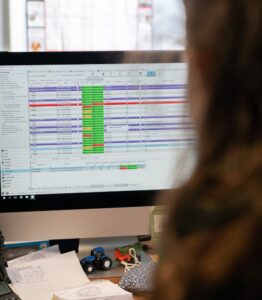
With flexible automation, it is entirely possible to integrate an entire pre-existing WMS or ERP software package into your solution. That is how OrderWise works. With our teams of talented technicians and expert engineers, it is more than possible to build a solution around any manner of pre-existing software model.
Jon Roberts, Sales Director at OrderWise
jon.roberts@orderwise.co.uk